
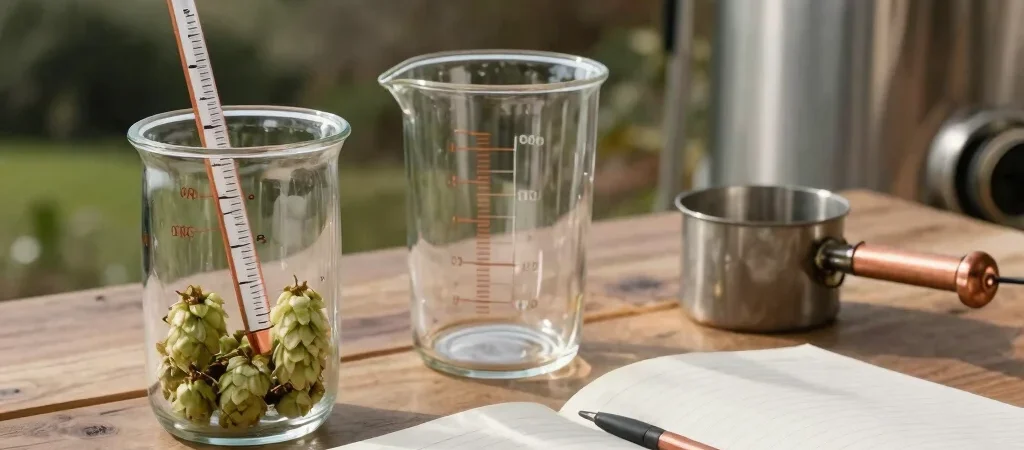
The hydrometer reading is lower than the recipe predicted, and the first impulse is to add more grain next time. Pause before editing the ingredient list. Final volume, sample temperature, and how the reading was taken can all affect what that number tells you.
Check the measurement first
Confirm that the sample temperature is appropriate for your hydrometer, or apply its temperature correction, and make sure the sample is well mixed before measuring. A refractometer reading taken after fermentation needs a correction too, because alcohol affects the result. Write down the instrument and method so future readings can be compared on the same basis.
Put gravity beside volume
Gravity without the matching wort volume gives an incomplete picture of extraction and concentration. Note both at the same stage of the brew, such as before the boil or into the fermenter, and compare them with the recipe’s planned values for that stage. If the volume is high, a lower gravity may reflect dilution rather than a change in how well the mash converted.
Change one variable next time
If repeated, well-recorded batches point to a consistent efficiency difference, then revising the grain bill or the recipe software’s efficiency setting may make sense. If this is the first miss, check practical factors such as crush, mash temperature, and collection volume before changing several ingredients at once. Keep the original recipe and label each revision; that way, the next tasting note can tell you whether the change helped.