
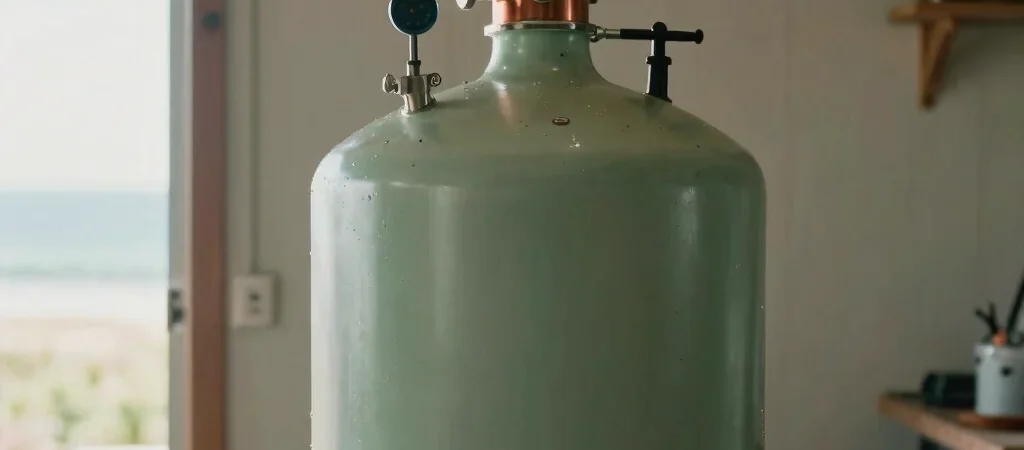
A fermenter tucked into a cool Ventura garage may seem to be holding a steady temperature, while the yeast inside is generating heat and pushing the beer warmer. That difference can shape how fermentation proceeds, so an air reading across the room is only part of the picture.
Measure the beer itself
A temperature probe held against the fermenter wall and covered with insulation gives a more useful reading than a thermometer on the opposite side of the room. It is not a perfect measurement of the liquid, but it tracks the vessel more closely and consistently. Use the yeast maker’s recommended range as your reference, rather than treating one temperature as right for every strain.
Plan for fermentation heat
Active fermentation can warm the wort above the surrounding air, especially when the room temperature is already near the upper end of the yeast’s range. That is why a temperature check on brew day does not tell you how the next few days will go. Check the fermenter during the most active stage, not just when you pitch.
Choose a control you can maintain
For a modest temperature swing, a tub of water around the fermenter can buffer changes; swapping in a frozen water bottle can cool it gradually, but it needs regular attention. A temperature-controlled chamber offers steadier control, provided the probe is positioned and insulated consistently. Whatever the setup, make one adjustment at a time and record the reading and timing so the next batch gives you something useful to compare.